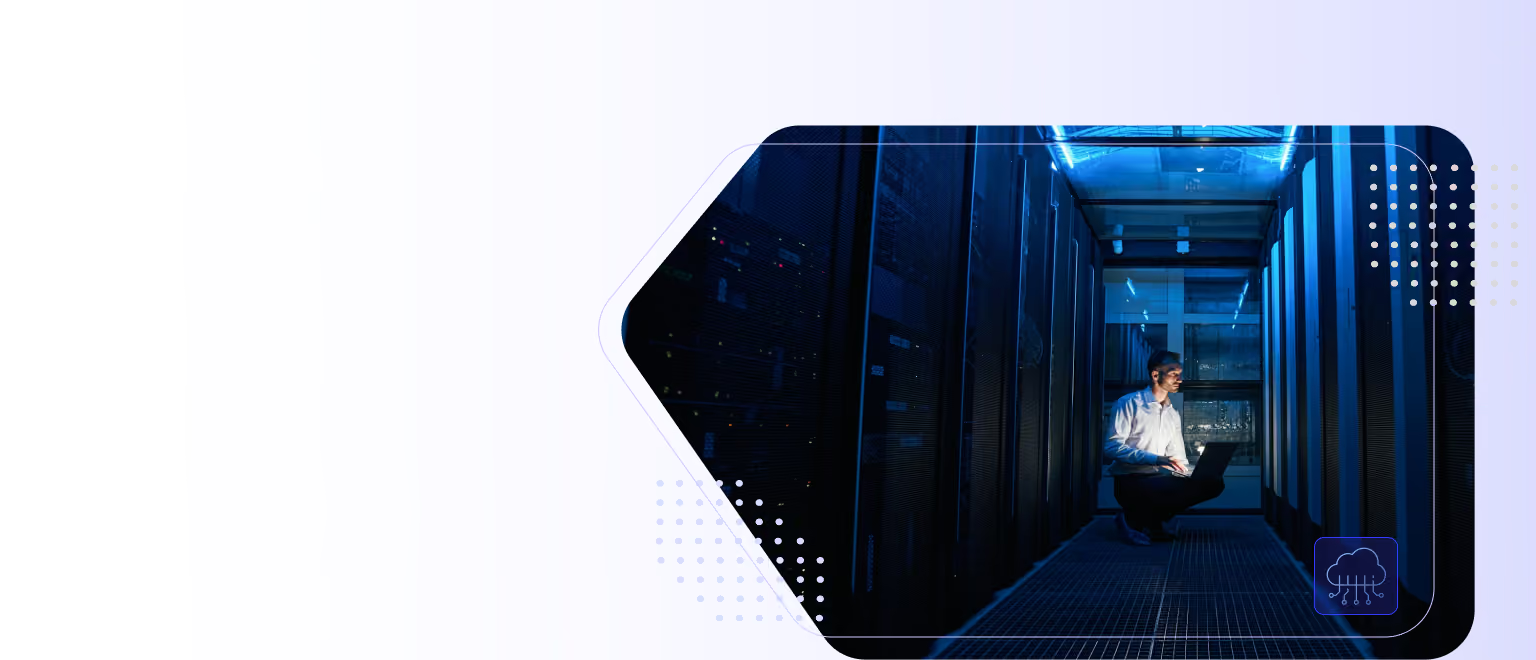
End-to-end migration from on-premise and legacy infrastructure to modern cloud platforms — engineered for production environments and continuity of operations.
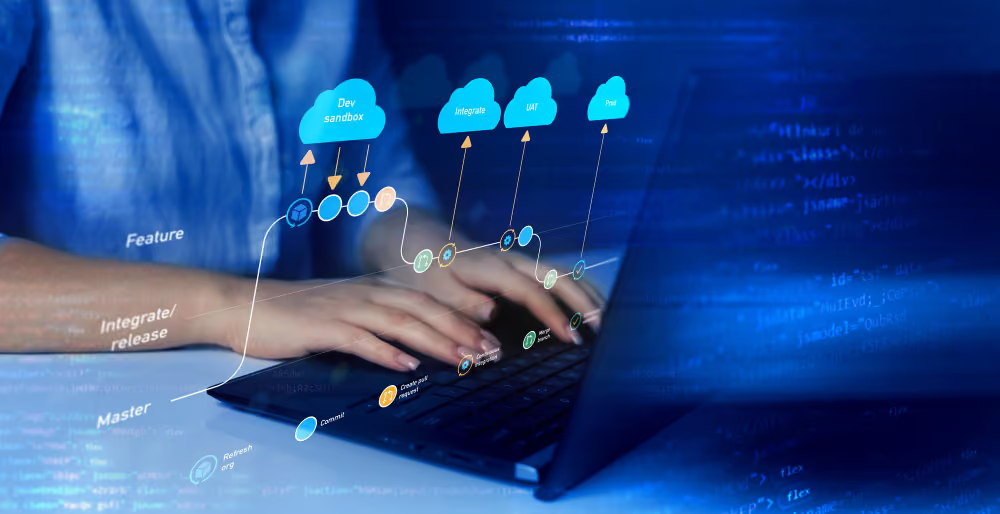
Ongoing operational management of your cloud environment, including monitoring, incident response, patching, and platform engineering.
Reference architectures, environment design, and infrastructure-as-code foundations built for the workloads you actually run.

Cost governance, usage analysis, and optimization programs that bring cloud spend under operational control.
In-Kingdom delivery on sovereign-compliant infrastructure, including locally compliant billing, regional operations, and regulated workload support.
Cloud security baselines, identity and access management, encryption, and compliance posture aligned to ISO 27001 and regulated industry requirements.

The pipelines, automation, and platform tooling that turn cloud infrastructure into a reliable engineering surface for the rest of the business.
The cloud shifts infrastructure from a fixed capital line to a usage-driven operating line. Spend follows actual demand rather than provisioned capacity.
Cloud removes the wait time between idea and infrastructure. Teams ship new environments, services, and capabilities in days, not quarters.
Cloud lets the business expand without re-provisioning. Capacity moves up and down as demand changes, without rebuilding the stack underneath.
Cloud-native architectures absorb failure rather than break under it. Uptime, redundancy, and recovery become engineered properties of the system.
The cloud changes the surface area of security from rooms and racks to identities, configurations, and data. Done well, it raises the security baseline of the entire business.
Cloud lets the business operate close to where the customer is. Latency, data residency, and regionalcompliance become design choices rather than constraints.
Cloud reshapes how engineering teams build. Infrastructure becomes code, deployments become repeatable, and operations become a discipline rather than a firefight.


We assess your current infrastructure, workloads, dependencies, and operational posture to build a clear picture of what's running today.
We design the target cloud architecture — environments, networks, identity model, and platform choices — calibrated to the workloads and constraints we found in discovery.
We sequence the migration into waves that minimize operational risk, prioritize high-value workloads, and align with the business's continuity requirements.
We move workloads into the target environment under controlled cutover, with rollback plans, validation steps, and data integrity checks at each stage.
We tune the environment for cost, performance, and security after migration — including FinOps baselines, security posture review, and platform refinements.
We run the ongoing monitoring, incident response, patching, and platform engineering that keep the cloud environment reliable and accountable over time.
Selected engagements across applied AI, cloud, integration, and technical talent deployment.
The technologies Cyberstack delivers on for cloud engagements.
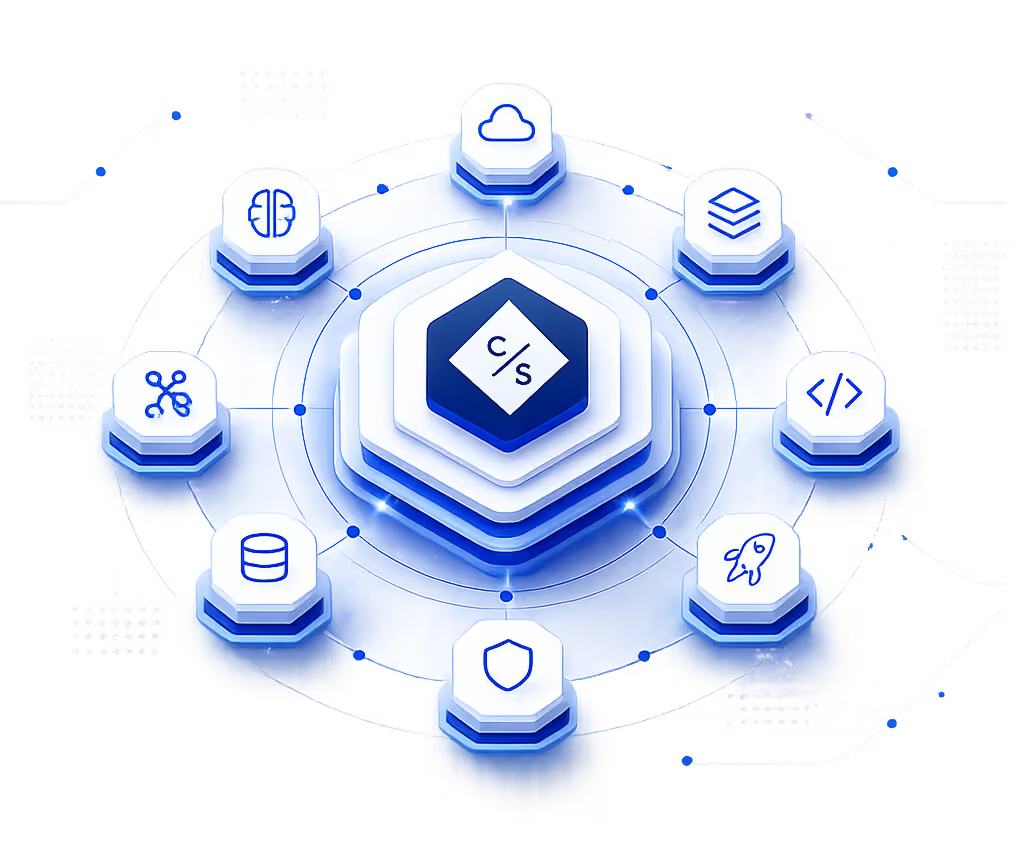
Microsoft Azure · GCP · AWS · STC Cloud
Terraform · Ansible · Pulumi
Docker · Kubernetes · Helm
GitHub · GitLab · Jenkins · GitHub Actions
Datadog · Prometheus · Grafana · New Relic
HashiCorp Vault · Okta · CrowdStrike
Cloudflare · F5
PostgreSQL · MongoDB · Redis · S3 / Cloud Storage